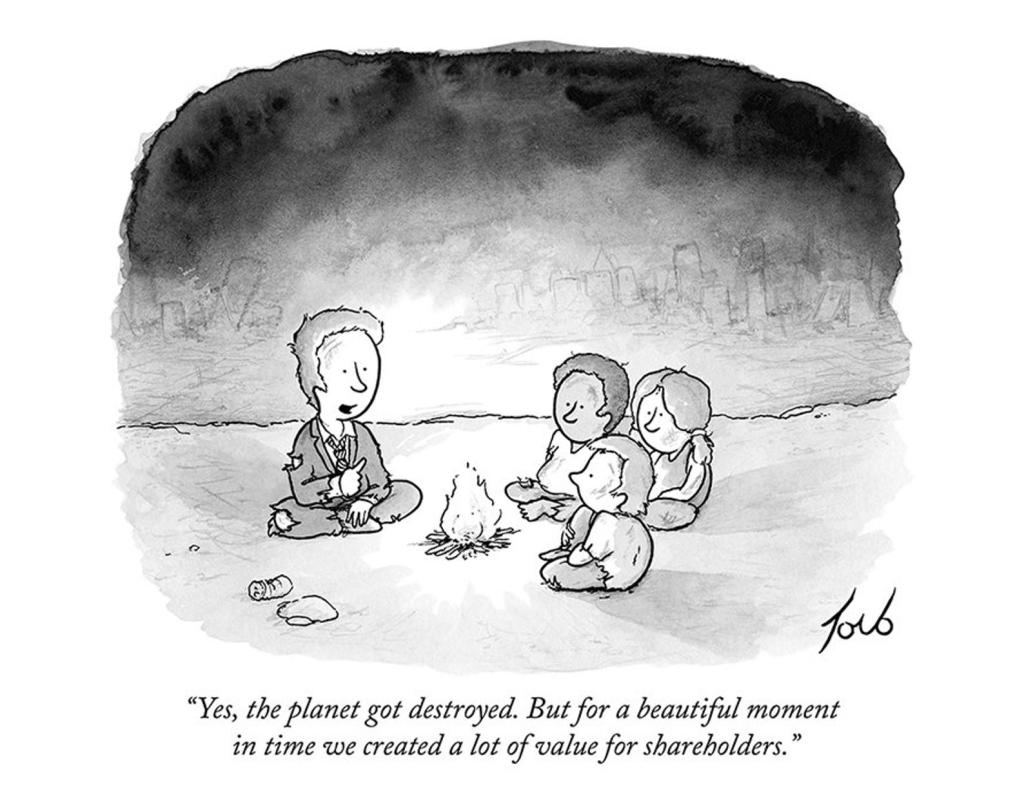
*Disclaimer: This is just one gal’s view on a topic that happens to do with money (and not to be construed as investment advice)*
Full of idealism as I started my career in finance, I wanted to learn everything I could about this mysterious “sustainable investing.” In the early 2010s there were many preconceived notions around this topic. I wanted to get to the bottom of it to inform both my career path and my own investing choices. I felt a disconnect: Why did I recycle and compost and buy organic, but still invest in companies that polluted rivers or treated their workers like garbage?
How could I make sense of my options as a new investor with a 401(k)? Making an informed choice about incorporating sustainability into investments, or having any choice at all, was a serious challenge.
While I am no longer an investment professional, I still care deeply about sustainability and capital markets. I am thrilled at the progress that has taken sustainable investing from niche to mainstream over the past 10 years (see letters written by Larry Fink (CEO of the company that manages the ubiquitous iShares ETFs) for further proof of acceptance). The current availability of sustainable products for the average investor delights me.
However, sustainable investing is not all green grass and blue skies.
Serious challenges persist, such as greenwashing and confusion around myriad definitions and strategies. I know how perplexing this topic can be amongst consumers and professionals alike, especially as (debunked) myths persist. On top of that, it may seem daunting to figure out how to incorporate sustainability into a topic that makes your eyes glaze over.
I’m here to clear some of the fog from around this subject. Below, I outline what those of us dipping our toes in the water of sustainable investing should know, why we should care, and what we can (realistically) do about it.
Question 1: What the hell is sustainable investing?
In a nutshell: sustainable investing is an investment discipline that considers environmental, social, and corporate governance (ESG) criteria to generate long-term competitive financial returns and positive societal impact. (USSIF).
Wait… this doesn’t mean you have to give up returns? The research says no, not if you don’t want to. You can care about profits, people, and the planet, all at the same time. Yay for (conscious) capitalism!
Terms used interchangeably with sustainable investing are ESG, values-based or socially responsible, green or eco-friendly, or impact investing. These all have the same bottom line: you can care about other aspects of a company’s performance besides just financial metrics.
I like to divide sustainable investing into three main branches: negative screening, ESG integration, and impact investing.
(1) Negative screening
Don’t invest in certain industries or companies, period. Another term for this is divestment (similar idea to a boycott). Traditionally, this tactic was applied to “sin stocks” like alcohol, tobacco, firearms, etc. You will often hear negative screening discussed around “values-based investing.”

Famous divestment campaigns include divesting from companies in South Africa during the anti-apartheid movement. Recently, environmental activist campaigns that promote divestment from fossil fuels have gained popularity, particularly at colleges and universities. There is hot debate about whether divestment works, or if shareholder engagement (when investors engage directly with companies on ESG issues) is a more effective strategy
(2) ESG Integration
Invest in companies that incorporate environmental, social, and corporate governance insights into their decision-making. One can invest in any industry, but in the top-performing companies within each industry. This aspect of sustainable investing has evolved and become more sophisticated. The robust research conducted and the availability of sustainability-related corporate disclosures have played key roles. Who would have thought that the websites of the largest oil & gas companies would one day highlight plans to combat the climate crisis? It’s a wild world we live in.
(3) Impact investing
Invest in companies whose main goal is to have a positive social or environmental impact through their products/services. The Impact Engine’s blog post on the Spectrum of Impact Investing outlines where impact investing fits in between traditional investing and philanthropy. Typically, impact investing has been geared toward early-stage or smaller ventures, but companies with an environmental or social mission are growing like gangbusters. A conscious consumer loves to see it.

Question 2: Why do my investing choices matter?
We should all do our part to take care of our beautiful home planet. Let’s make sure corporations know this too.
We consumers can vote with our wallets in order to show brands how we feel about their products. This concept applies whether you’re making tangible choices like buying local broccoli or an organic cotton t-shirt, or exploring the intangibility of the stock market. If you own stock in a company, it means exactly that: you are an owner (even if it’s a tiny percentage). So own it!
Make your voice heard. If you don’t buy mass-produced meat from Company Z because of its effect on the environment, you don’t have to support Z by investing your hard-earned money in it either. Or, keep investing in Company Z, but use that ownership for good by letting Z know how you feel about the way it does business.
Don’t these choices make you feel powerful?
Question 3: What can I do about it?
You can find the best option for your personal finances and values. Ask a professional (or google) about what choices are available to you. Below are some guiding questions to get you started. The more financial advisors hear from clients about sustainability and impact, the more informed the advisors will have to become.
Cash: Where are your checking and savings accounts? Is it a local or national bank? Do you know about the bank’s other activities or mission?
Stocks/bonds (i.e. what’s in most 401(k)/IRAs): Does your financial institution show ESG or sustainability ratings for your investments? Do they have research or reports on sustainable investing? Are sustainable or ESG-themed ETFs or mutual funds available? Is it clear whether negative screening (divestment) or shareholder engagement on ESG topics are utilized?
Alternative Investments: If you’ve taken your investments to the next level and are interested in private equity or venture capital, you can ask the same questions about environmental and social impact considerations. Some of the largest PE firms have started impact investment funds, but there are also boutique firms that specialize in impact investing. You may find options like local angel investor circles to your liking. Ask around and see what’s happening in your area.
Is the sustainable investing industry perfect? No. Is greenwashing an issue? Yes. Should that stop you from investing in sustainable products? I think not. Ask questions, do some research, and try to keep the cynicism at bay. When I feel cracks in my idealism, I remind myself that our collective voices have made, and will continue to make, a difference in this space.
 Sarah Clark-Hamel
Another well written, thoughtful article by Sarah CH
LikeLike