Pre-2019: Background of the New Year’s Resolution
I’ve been dressing myself since age 2. Much to my mom’s (the anti-shopper’s) chagrin, I desired to find a personal style quite young (I wish I still had that tie-dye tank dress from age 4…).
This love for beautiful clothing blossomed while I was living in Manhattan. I would pop into Bloomingdale’s on the way home from work, or add clothes to my cart on jcrew.com via my phone. This was not the best habit for the earth or my wallet. I knew it would take a drastic change to upend this routine.
On New Year’s Eve 2019, I resolved to abstain from buying new clothing for the entire year. By “new” I really meant “virgin” or “first-hand” clothing — I wanted to become more thoughtful and creative with my purchases. I had no idea whether I would succumb once springtime arrived and the flower-printed sundresses appeared in the window at Bloomie’s, or if this would be the easiest resolution I had ever made.
Before I recount my sartorial successes and failures that year, I’d like to explain what spurred this resolution in the first place.
The fashion industry has a waste crisis, and we, the consumers, play a large role.
It is easiest to blame the fast fashion brands, as they produce and sell cheap clothing at an unsustainable pace. However, the entire apparel industry has an environmental crisis on its hands at all levels of the value chain. As consumers, we have control over the purchase and the end-of-life of our favorite chambray button-down. That is, we choose whether to sew a button back on, mend a hole, or buy an entirely new shirt.
Apparel production is resource intensive. When you buy a brand new pair of jeans, the cotton threads may travel across the globe to be processed into denim, then shipped thousands more miles to the mall near you (see this fascinating Planet Money podcast to follow the production of a t-shirt around the world from cotton farm to textile factory to sewing machine). Plastic and cardboard packaging surrounds this clothing at different points in the value chain as well.
Post purchase, both clothing returns and disposal methods pose major environmental challenges.
Burberry came under fire for burning excess merchandise in order to limit access and maintain “brand value.” Sadly, they are not alone in irresponsibly handling overstock and returns. Many companies have not organized the reverse logistics necessary to accurately process returns. So, they trash perfectly new clothing instead of implementing a more responsible return & resale process.
Do you remember the devastating garment factory fire in Bangladesh about a decade ago (which is one of many such examples)? The pressure to churn out new styles every month has a serious social cost as well.
Thankfully, the industry is reckoning with these challenges. There has been an explosion of articles and advocacy promoting the inclusion of fashion in a circular economy, such as this new series from CNN and the Ellen MacArthur Foundation’s efforts to Make Fashion Circular. However, this is merely the start of a long journey towards circularity and sustainability.
As 2018 was coming to a close, I needed to confront the fact that my current shopping habits and my desire to produce less waste were not compatible.
2019: The Resolution
So, back to the New Year’s Resolution. Was it a smashing success or resounding failure?
Well… if success involves learning and changing habits, I would tip the scales towards success. I already mended clothing myself (stitching holes in seams, re-attaching buttons, etc), and donated old clothing, so my main challenge was my shopping patterns. I permanently unsubscribed from all of the sales updates from my favorite clothing brands and successfully avoided them for all of 2019 (go me!). Below are a few additional highlights.
Highlight #1
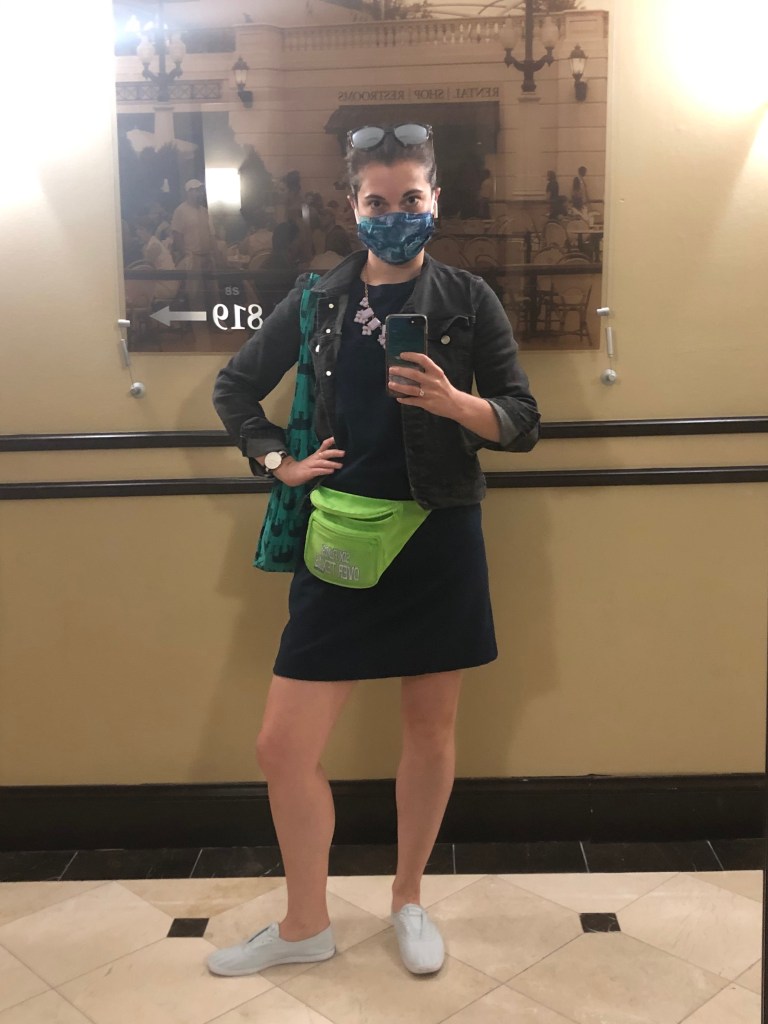
I discovered how easy it is to shop at online resalers! When that mid-spring shopping urge appeared when the weather warmed up (as I knew it would), I checked out www.poshmark.com to see whether anyone was selling a gently worn denim jacket. A week later, I was the proud owner of a soft, black denim j.crew jacket that I now wear all the time (see cover photo). Companies like Poshmark and Thredup (amongst others) have streamlined the second-hand shopping process.
Highlight #2
At the end of 2018, when a business school ski trip (with costume parties every night) rolled around, I resisted the temptation to order everything with one-click, and instead weeded through Goodwill with my friend Amy. We found some *fabulous* costumes for not one, but four themed parties (including piecing together a Zenon Girl of the 21st Century costume and a neon 80’s outfit- they were out of this world). The “Six Flags Over Texas” lime green fanny pack (see cover photo) became my most convenient accessory this spring and summer.
Cheat #1
I did let myself cheat. The major exception to my resolution was a week-long backpacking trip in Patagonia, for which I needed proper gear. I decided that brand new hiking boots and hiking clothing were a worthwhile investment that were necessary for both survival and comfort.
Cheat #2
This had less to do with survival, and more to do with meaningful moments: I allowed myself to buy group t-shirts and branded gear (#bschool #bacheloretteparties) if I thought I would *actually* wear the item, and it wouldn’t end up in the next donation pile. For me, the memories were worth it.
2020: The Lingering Effects
Reduction, Resale & Rental
I now shop less for clothing, period. When I do have my eye on a new tie-dye sweatshirt (really though, how do the targeted instagram ads read my mind like that?), I first look at second-hand or vintage options (check out A Girl From the North Country for curated vintage clothing and hand-dyed goods). For weddings and formal events in 2019 I wore dresses from my closet, but rental companies like Rent the Runway are on my radar for future events.
Repair & Refurbishment
Either finding a great tailor/seamstress or learning to mend clothing yourself is one of the keys to prolonging clothing life. Also, did you know that most clothing items don’t actually need to be drycleaned? The Laundress interview on How I Built This was a fascinating look at eco-friendly alternatives to the dry cleaner. Avoiding the dry cleaner and the dryer also extend closet life. My mom has always hang-dried her clothing, and her 30-year-old t-shirts are still in top shape.
New Clothing
When I do decide it’s worth purchasing a brand new item, I consider whether the clothing brand is a B. Corp, uses natural or organic fabrics, maintains ethical working environments, etc. It can be tough to know which new brands are the real deal, and which have excellent marketing campaigns but no substance. Many consumers and journalists had the same question, so a bit of online research can turn up a fair amount of information on popular brands. Buying well-made clothing may be more expensive, but it should last longer (see a Booth classmate’s ChiBus article on sustainability and personal style).
Next Goal: Sewing Maven
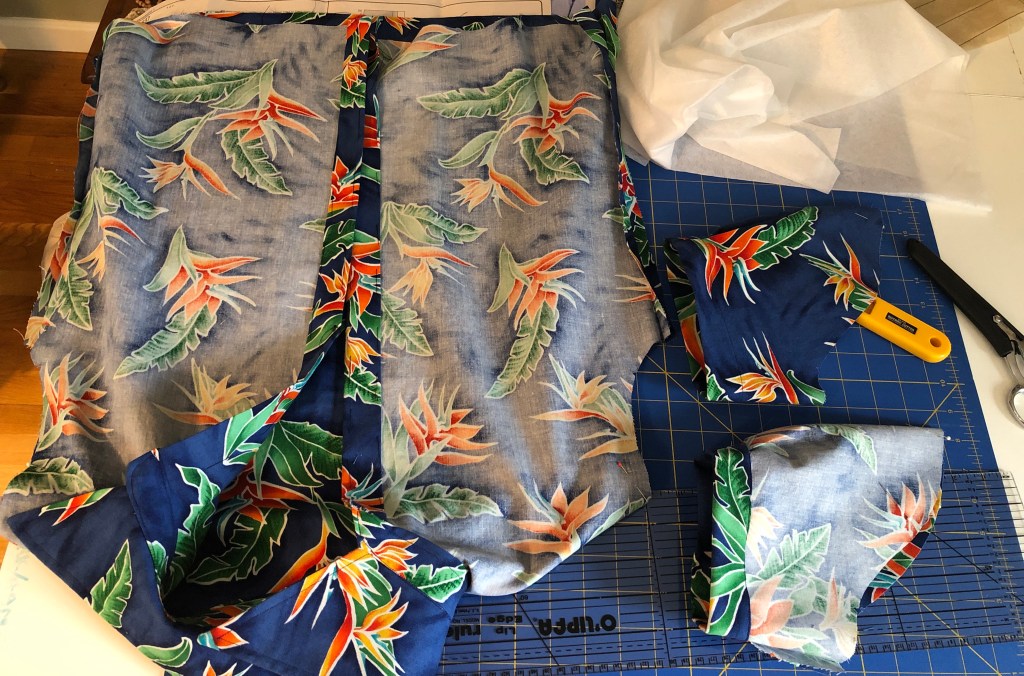
Since I’m often at home these days, I started sewing my own clothing! I just acquired a sewing machine (with over 120 stitches!), and I am already obsessed. It’s so satisfying to wear or gift clothing that I’ve made myself — even if the collar doesn’t turn out exactly how I pictured it (see above & below for Project #1). Although new fabric is involved, I’ll try to purchase from the local fabric store that my family has been visiting since the 1980s. I hope this clothing will last and last (although that aspect will completely depend on my skill level – wish me luck), and that I’ll acquire new mending and alteration techniques along the way.
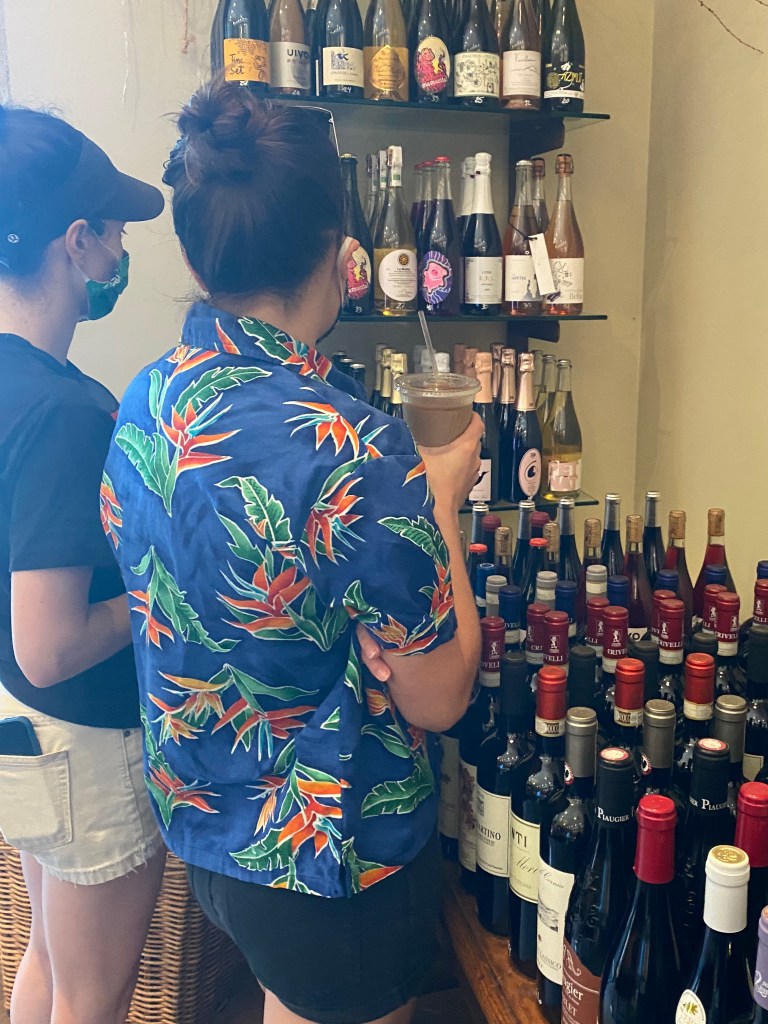
(Yes, I admit to sipping iced coffee from disposable plastic here)
Here’s to the compatibility of personal style, creativity, and low-waste closets. May our wardrobes be forever sustainable and satisfying!
 Sarah Clark-Hamel
Hi Sarah – finally getting around to reading this. It’s great, and definitely inspires me to make more conscious shopping decisions, even though I also love clothing a little too much! I hope you are doing well! 🙂
LikeLike