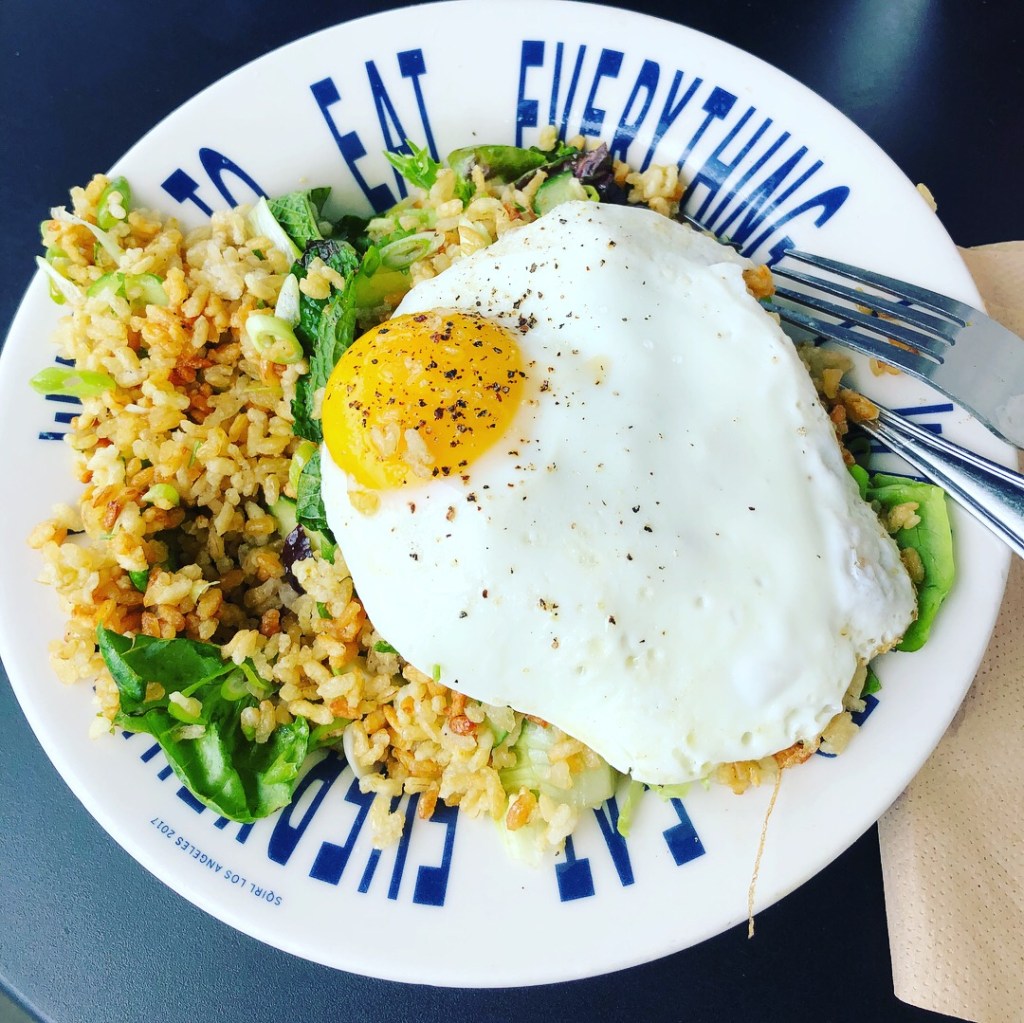
If you had to choose between an actual oven in your apartment and a washer/dryer, which would you choose? When I moved to New York City in my early 20s, I discovered that most apartments were too small to have both. So, in order to roast vegetables in winter and bake zucchini bread in summer, I chose the oven. That meant I had to walk two blocks and three flights of stairs to a laundromat.
You can see my priorities are more in my belly than caring if strangers saw my ripped sleep shirts.
It all comes down to food. Not just because I love to eat fresh ingredients from the farmer’s market, but because how I prepare and consume food directly relates to how much waste I generate. Even if you’re blissfully ignorant of the consequences of your waste, you’re likely quietly aware of how often you take out the trash. Did you know that the methane released by rotting food in landfills is a significant contributor to greenhouse gas emissions and climate change? I was very surprised when I learned this fact. (Turns out the one thing I thought was always compostable, when disposed of in the wrong way, ends up doing more harm than good!)
Despite my love of cooking, in the city I discovered I could order take-out Thai food at the click of a button.
I also discovered the convenience of popping into one of the many Starbucks for an iced coffee. But where the heck were all the recycling bins?
Coming from the woods of Maine, I didn’t think as much about these topics. I grew up in a house with a large vegetable garden, a compost, and chickens. We could pick blueberries for breakfast and cut fresh lettuce to make our salads for lunch. If we forgot about leftovers for a few days, the chickens would happily eat them (they will eat almost anything). It was idyllic and delicious, and I thought only possible in Maine.
As I learned more about the effect of our consumption choices, I wanted to figure out ways that I could eat in New York (or any city for that matter) without feeling a nagging guilt that I was hurting the environment with each bite. Although I was inundated with messages of how to be a more conscious eater, it was hard to make sense of how it could be possible in a city with a full-time job.
This is why I’m serving up my three simplest tips for reducing your food waste, while eating really well too.
Step 1: REDUCE! Less can really be more
Eat less meat by eating your colors (no, meat is not a color)
You have probably heard of the meatless Monday. Given that animal agriculture uses nearly half of the world’s land, contributes to about 15% of global greenhouse gas emissions, AND uses about 25% of the world’s freshwater, there are very good reasons to eat less meat. I became a vegetarian 10 years ago after learning these figures, but I know that going cold turkey isn’t for everyone.
The key is to find superb meals that happen to not include animals. The more colorful the dish, the better. I’ll bet there are certain foods you love that you didn’t even realize are vegetarian. Some of my go-to recipes include:
- Carrot Ginger Brown Rice (I love everything by Naturally Ella)
- Penne with Roasted Cauliflower and Lemon Caper Vinaigrette
- Thanksgiving Kale (but delicious year round!)
When you do eat meat – buy responsibly! Check out what your local farmers are raising this year by asking at the farmer’s market. I’ve heard rumors that well-raised meat tastes better.
(Okay, okay, I may have tested out that rumor myself. I finally sampled the organic chicken and pork that my dad raises at his small farm. This jury of one vegetarian had to admit — happy animals lead to happy palettes).
Only buy food you will gladly eat
I was shocked to learn that discarded food makes up almost a third of landfills. But city grocery shopping is logistically challenging, especially if you live far from a grocery store or in a walk-up building. It’s easy to overshop and end up with spoiled food. For the love of mother earth – don’t buy that bunch of kale for the hundredth time just because that influencer says to. Buy something that *you* think is delicious! Don’t forget about your freezer either – many dishes can be frozen and enjoyed later. Plus, if you can compost in your area, it’s worth it.
Use less take-out containers
Home-prepared meals save money AND cut down on excess packaging. Period. But, if you’re going to visit a restaurant, note their food packaging. Restaurant take-out containers run the gamut from straight-to-landfill (styrofoam), to recyclable plastic, to biodegradable/industrial compostable. When you do opt for take-out, notice the type of packaging that your favorite spots use. Let them know what you think of their packaging – your customer voice matters.
Step 2: REUSE! (you may sense a theme…)
Reuse take-out containers at home
Never buy tupperware again. When you do get take-out, save that packaging! You can use it for leftovers, freezing homemade food, storing pens or lipstick – endless possibilities. If you mostly shop at the grocery store, see what packaging can be reused or recycled.
Reuse containers and bags at the store
Bring reusable containers and bags when you go grocery shopping. Admittedly, I forget reusable/recycled produce bags often. In that case, I just let the lemons roll around my basket (they’re pretty resilient!). If you are running home from work (hypothetically, when we went to work in person): keep a small foldable bag in your backpack or purse. It may not hold everything, but it will cut down on excess baggage.
If you order groceries delivered: reuse those paper or plastic bags. I have never bought small garbage bin liners in my life (humble brag), and instead I use those plastic bags.
Step 3: Bon Appetit! Buen Provecho! ENJOY!
Cook with friends (together and apart)
Learn to cook! Take on simple recipes, then graduate to more complex ones. In a small kitchen, one-pot meals are a great option. If the word “cooking” intimidates you – how about learning to assemble a nice cheese & fruit board? Unpack the cheese, cut some fruit, put crackers in a nice circle, et voila! Your friends will be so impressed.
Ideas for enjoying your culinary talents:
- Dinner parties at home, either around a real table or BYO pillows for sitting on the floor
- Picnics on a sunny day
- Prepare the same recipe with friends via video chat, then dine “together” and enjoy the delicious food you’ve made. Even apart, you can savor the same flavors!
Bonus idea: Farmers Market Brunch
Tired of spending $40+ on eggs benedict and a bloody? (Remember when you used to do that?) An alternative is an outing with friends to the farmer’s market. Check out what the locals are cooking – there might be muffins with orchard-fresh fruit, or breakfast burritos with eggs from the farmer’s chickens. You can eat while browsing the abundance of farm stalls. See what looks good, and buy those ingredients for dinner. Friends, grocery shopping, and sunshine all rolled into one outing. What’s better than that?
In conclusion, you can revise your food shopping, meal planning, and waste disposal to meet your values – your palate will love it and mother nature will thank you.
Sources:
- Sustainable Management Food Basics (EPA)
- Basic Information about Landfill Gas (EPA)
- Fight Climate Change by Preventing Food Waste (WWF)
- Effects of meat production from Impossible Foods
Articles about food, environment, and climate justice:
 Sarah Clark-Hamel
One thought on “How to Have Your Crispy Rice and Save the Earth Too: 3 Simple Steps to Low Waste Eating”